Clearing Saw Palmettos, Brazilian Pepper & Overgrown Acreage in Central Florida
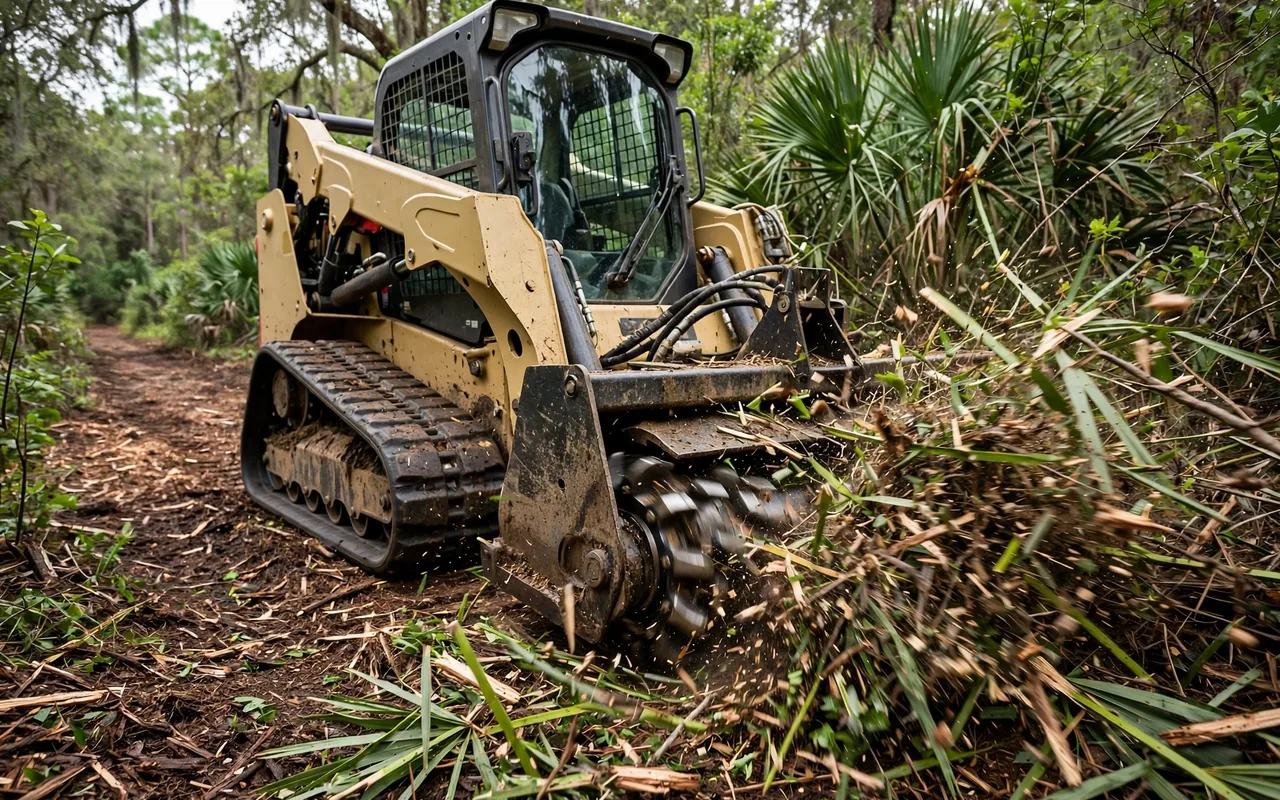
Anyone who has tried to clear an overgrown Florida lot with a farm tractor and a light rotary bush hog learns a hard lesson in the first ten minutes: Central Florida brush is not pasture grass.
Between woody horizontal saw palmetto trunks, tangled muscadine grapevines, thorny blackberry briars, wax myrtle thickets, and invasive Brazilian pepper trees, an unmaintained parcel in Lake, Orange, Osceola, Polk, or Sumter County quickly turns into a wall of vegetation you can't even walk through to see your property lines.
Why Bush Hogging Alone Fails on Mature Saw Palmettos
Saw palmetto (Serenoa repens) grows thick, fibrous trunks that creep horizontally along and just beneath the sandy soil surface. A tractor bush hog ($75–$250/acre) is designed for tall bahia grass and light weeds—when its blades hit woody palmetto crowns or 4-inch saplings, it leaves ragged, tire-puncturing stubs everywhere and can't penetrate thick clumps.
How Forestry Mulching Reclaims Overgrown Florida Land in One Pass
Our high-flow forestry mulcher ($1,800–$4,000/acre, $3,000 day minimum) is purpose-built for Florida palmetto flatwoods, oak scrub, and overgrown pasture lines:
- Grinds Palmetto Crowns Flush to the Dirt: The carbide drum shreds both the fronds and the woody horizontal trunks right down to ground level, leaving a smooth, walkable carpet of mulch.
- Eliminates Invasive Brazilian Pepper Without Burn Piles: Instead of pushing massive tangled piles of pepper trees that sit on your property for months waiting for a burn permit, the mulcher turns them into clean ground cover on the spot.
- Opens Property Lines, Fence Rows & Surveying Sightlines: Need your corners accessible for a boundary survey, new agricultural fencing, or a perc test? We can mulch clean 15- to 25-foot perimeter lanes around your entire tract in a single day.
Typical Acreage Clearing Budgets in Central Florida
- Up to 1 Acre (Overgrown Residential Lot or Fence Line): $3,000 – $4,000 (covered by our one-day forestry mulching minimum, or $1,500–$3,500 for light brush clearing).
- 2 to 5 Acres (Homestead, Mini-Farm, or Estate Lot): $4,000 – $15,000 depending on palmetto density and how many mature trees stay vs. go.
- 5 to 20+ Acres (Pasture Reclamation & Ranch Tracts): Custom multi-day per-acre pricing confirmed on a free site walk across Lake, Orange, Osceola, Polk, Seminole, and Sumter counties.
Send Photos of Your Overgrown Land for a Free Ballpark Today
Snap three or four photos of your thickest brush and road access, then upload them in our online quote calculator or text them directly to (352) 557-1125. We'll get your ballpark back within one business day and schedule a free site walk whenever you're ready.
Price Your Land Clearing or Grading Job in 60 Seconds
Use our live Central Florida per-acre calculator to enter your lot size, pick your services, and attach photos of your land. Online ballparks and on-site walks are always free.
Open Instant Quote Calculator → Text Photos to (352) 557-1125Frequently Asked Questions
What is the best way to clear saw palmettos in Florida?
High-flow forestry mulching is the fastest, cleanest way to clear dense saw palmettos where no concrete slab is planned, shredding the fronds and woody trunks into flat ground mulch in one pass. Where a building pad or driveway will go, palmetto root mats should be raked and grubbed out.
How many acres can a forestry mulcher clear in a day in Florida?
Depending on brush thickness and tree density, a commercial forestry mulcher typically clears 0.75 to 2.5 acres per day in Central Florida.
More Central Florida Land Clearing & Earthwork Guides
- How Much Does Land Clearing Cost Per Acre in Central Florida? (2026 Price Guide)
- Forestry Mulching vs. Bulldozer Land Clearing in Florida: Which Does Your Lot Need?
- Do You Need a Permit to Clear Land in Lake, Orange, Osceola, or Polk County FL?
- Preparing Raw Florida Acreage for a House Pad, Barn, or Shop: Step-by-Step Site Prep Guide
- Stump Grinding vs. Stump Grubbing (Digging Out Roots): Why It Matters Before You Build