Do You Need a Permit to Clear Land in Lake, Orange, Osceola, or Polk County FL?
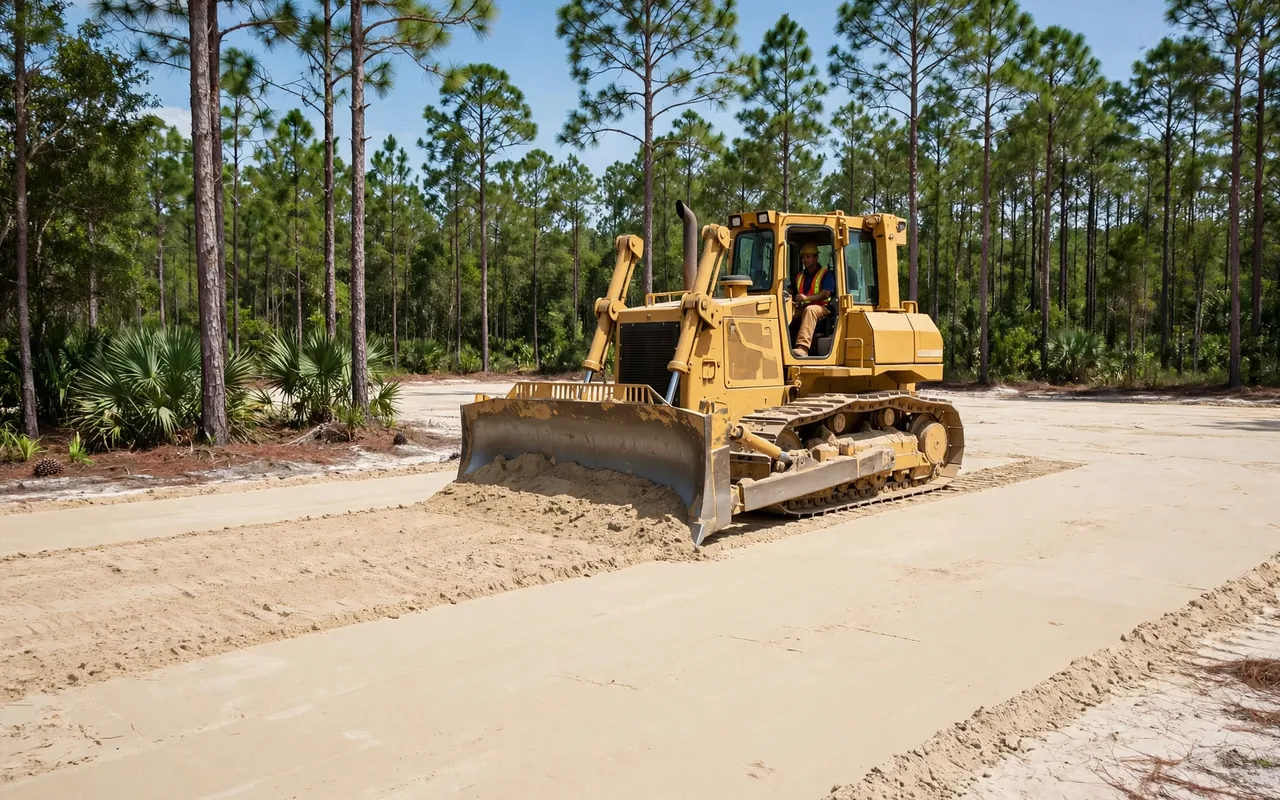
One of the most expensive mistakes a Florida property buyer can make is hiring an unvetted operator who unloads a machine and starts knocking down mature oaks or grading near a wetland without checking parcel rules first. Code enforcement stop-work orders and environmental fines in Central Florida can delay your build by months.
At Earth Purveyors, we walk your property before work begins and flag the exact permitting triggers that apply across Clermont, Lake County, Orange County, Osceola County, Polk County, Seminole County, and Sumter County.
1. Underbrush & Invasive Clearing vs. Protected Tree Removal
In most Central Florida jurisdictions, mowing grass, bush hogging pasture, and clearing non-protected underbrush (like saw palmetto, wax myrtle, grapevine, and invasive species such as Brazilian pepper, Chinaberry, and camphor trees) on an existing residential or agricultural parcel requires far less red tape than removing mature native canopy trees.
However, once you start removing trees above a certain caliper (measured as Diameter at Breast Height, or DBH—often 4 to 6 inches DBH for general native trees and stricter thresholds for historic/specimen Live Oaks and Sand Live Oaks), counties and cities like Clermont, Winter Garden, Orlando, and Kissimmee often require:
- An active Building Permit or Site Development / Mass Grading Permit showing the approved building footprint, septic drainfield, and driveway.
- A Tree Removal Permit or arborist exemption if clearing outside an approved building envelope (unless the parcel carries a bona fide Florida Greenbelt agricultural classification).
2. Florida FWC Gopher Tortoise Rules (The 25-Foot Rule)
High, dry sandy soils in Clermont, Minneola, Groveland, Leesburg, Apopka, and Lakeland are prime habitat for the Gopher Tortoise, a state-designated Threatened species regulated by the Florida Fish and Wildlife Conservation Commission (FWC).
- How to Spot a Burrow: Look for a half-moon-shaped tunnel entrance (flat on the bottom, arched on top) with a sandy apron of dug-out soil in front.
- The 25-Foot Buffer: Heavy machinery cannot collapse a burrow or clear/grade within a 25-foot radius of a potentially occupied gopher tortoise burrow without an FWC Authorised Agent survey and relocation permit.
- How We Handle It: During your free site walk, we check the clearing zone for burrows. If your lot only has one or two burrows outside your building pad, we can stake a 25-foot protective buffer around them and clear the rest of your property immediately while staying 100% compliant.
3. Wetland Setbacks & Water Management Districts (SJRWMD / SFWMD / SWFWMD)
Central Florida sits at the crossroads of three Water Management Districts: St. Johns River (Lake, Orange, Seminole), South Florida (Osceola, parts of Orange/Polk), and Southwest Florida (Sumter, Polk). Never push fill dirt into cypress heads, marsh edges, or jurisdictional wetlands, and respect the required 15- to 50-foot upland buffer zones around conservation areas.
4. The 1-Acre Soil Disturbance Rule (FDEP NPDES)
If your project disturbs 1.0 acre or more of soil (such as full root grubbing and grading across an entire 1.5-acre parcel), Florida Department of Environmental Protection (FDEP) stormwater rules generally require a Stormwater Pollution Prevention Plan (SWPPP) and silt fencing before earthwork starts. By contrast, selective forestry mulching that leaves roots and soil intact often causes minimal soil disturbance.
Have Us Walk Your Parcel Before You Clear
Send us your parcel address or cross streets and photos using our free online quote calculator, or call/text (352) 557-1125. We'll give you an honest ballpark price and walk the property with you so everything is done right the first time.
Price Your Land Clearing or Grading Job in 60 Seconds
Use our live Central Florida per-acre calculator to enter your lot size, pick your services, and attach photos of your land. Online ballparks and on-site walks are always free.
Open Instant Quote Calculator → Text Photos to (352) 557-1125Frequently Asked Questions
Do I need a permit for forestry mulching in Lake or Orange County FL?
Removing invasive species (like Brazilian pepper) and mulching underbrush below the county's protected tree DBH threshold is often allowed with minimal permitting on upland lots, provided no wetlands are disturbed and protected canopy trees remain untouched. Always verify parcel-specific overlays before clearing.
What happens if there is a gopher tortoise burrow on my Florida lot?
Florida law requires a 25-foot undisturbed buffer around potentially occupied gopher tortoise burrows during clearing and grading. If a burrow sits directly inside your house pad or driveway footprint, an FWC-authorized agent must survey and relocate the tortoise before that spot is graded.
More Central Florida Land Clearing & Earthwork Guides
- How Much Does Land Clearing Cost Per Acre in Central Florida? (2026 Price Guide)
- Forestry Mulching vs. Bulldozer Land Clearing in Florida: Which Does Your Lot Need?
- Preparing Raw Florida Acreage for a House Pad, Barn, or Shop: Step-by-Step Site Prep Guide
- Stump Grinding vs. Stump Grubbing (Digging Out Roots): Why It Matters Before You Build
- Clearing Saw Palmettos, Brazilian Pepper & Overgrown Acreage in Central Florida